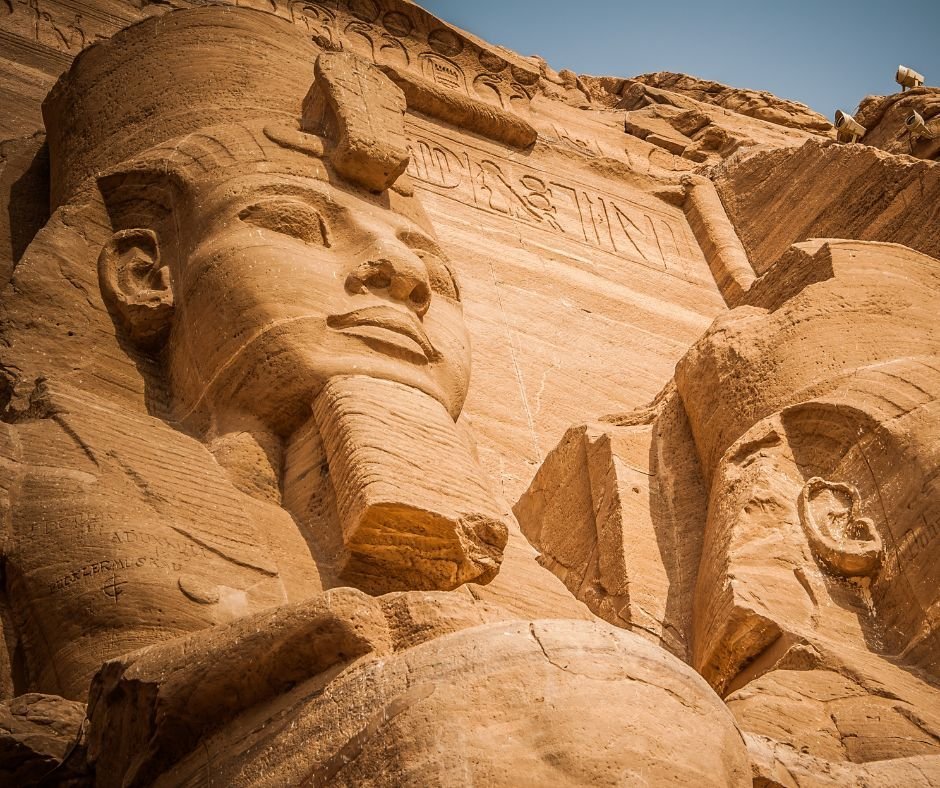
Far in the south of Egypt, close to the border with Sudan, four colossal statues of Ramses II sit facing the sunrise. Each is about 20 metres tall. They guard the entrance to the Great Temple of Abu Simbel, one of the most impressive monuments ever made. Here is Abu Simbel history in brief.
Abu Simbel history: a message in stone
Ramses II built Abu Simbel in the 13th century BC. The temples were cut directly into a sandstone cliff above the Nile. They were a message to anyone travelling north from Nubia: this is the land of a powerful king. Beside the Great Temple, a smaller temple honours his beloved queen Nefertari and the goddess Hathor, and on its facade the queen's statues are the same size as the king's, a rare honour.
The miracle of the sun
The Great Temple runs about 60 metres into the mountain. Twice a year, around 22 February and 22 October, the rising sun shines straight through the entrance and down the length of the temple, lighting the statues in the sanctuary at the very back. Only the statue of Ptah, a god linked with the underworld, stays in the dark. Thousands of people gather to see it every year.
Rescued from the lake
In the 1960s, the new Aswan High Dam was about to create a huge lake that would flood Abu Simbel forever. UNESCO launched an international campaign, and between 1964 and 1968 engineers cut both temples into more than a thousand huge blocks. They rebuilt them about 65 metres higher and 200 metres back from the river, inside an artificial mountain, keeping their exact orientation to the sun.
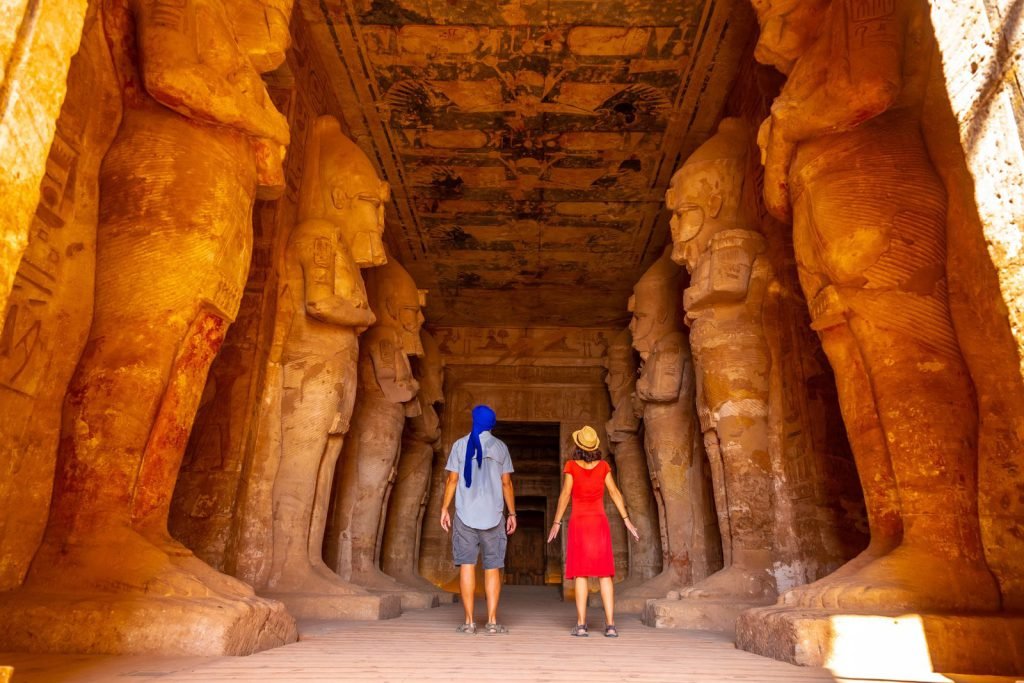
Abu Simbel was built by one king and saved by the whole world.
Amwaj tip: Abu Simbel is a long day trip from Aswan or Luxor, so an early start is part of the adventure. Arrive early for softer light on the facade, and do not miss the small temple of Nefertari.
Seeing Abu Simbel history for yourself
Most travelers reach the temples from Aswan, either by road through the desert or on a short flight. The road trip starts very early, in the dark, so you arrive while the light is still soft. Bring a warm layer for the early start, as desert mornings can be cool even when the day turns hot.
If you would like to see the sun festival in February or October, plan well ahead. These are the busiest days of the year, hotels in the small town fill up, and crowds gather before dawn to wait for the first rays to reach the sanctuary.
Inside the Great Temple, look for the reliefs of the Battle of Kadesh, where Ramses II is shown charging the enemy in his chariot. It is one of the most famous battle scenes of the ancient world. The temples are part of the UNESCO World Heritage Site of the Nubian Monuments from Abu Simbel to Philae, which tells the full story of the rescue campaign.