The ancient Egyptians called it Ipet-isut, "the most select of places". Today we call it Karnak, and it is one of the largest religious complexes ever built. Standing on the east bank of the Nile in Luxor, ancient Thebes, it was the home of the god Amun-Ra, king of the gods, and the spiritual heart of Egypt for centuries. Here is Karnak Temple history in brief.
Karnak Temple history: a temple that never stopped growing
Building at Karnak began in the Middle Kingdom, around 4,000 years ago, and continued until the time of the Ptolemies and the Romans. Almost every great pharaoh wanted to leave his mark here. Each one added a new gateway (pylon), a courtyard, a chapel or a statue, so walking through Karnak is like walking through the pages of Egyptian history.
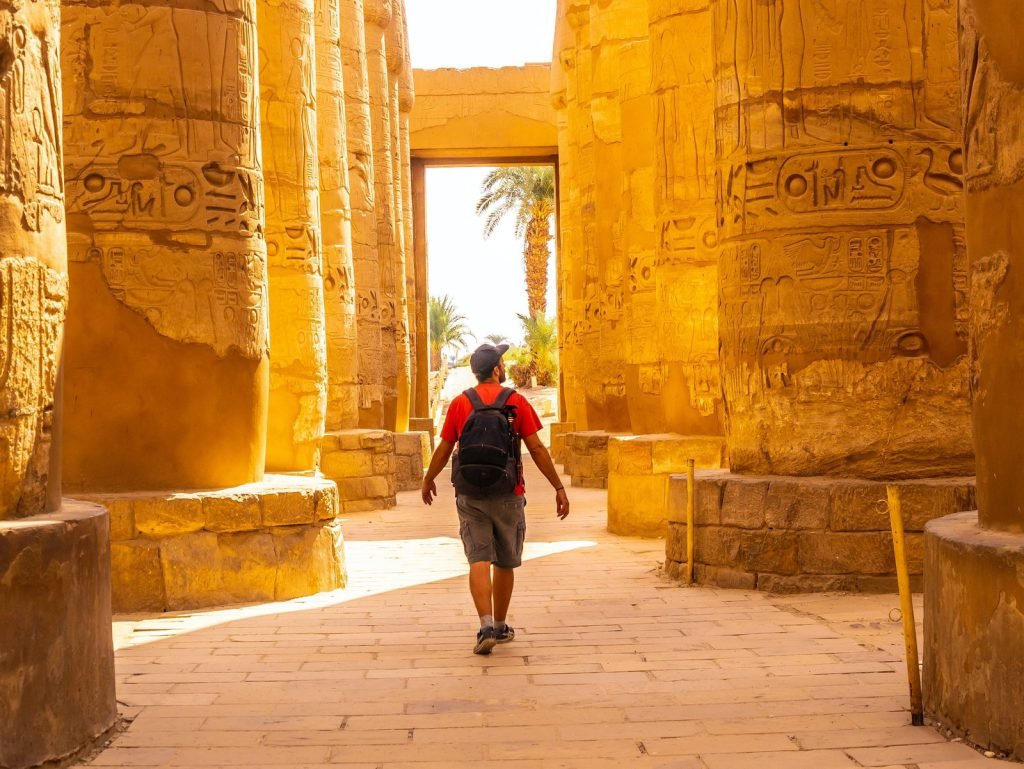
The Great Hypostyle Hall
The most famous part of Karnak is the Great Hypostyle Hall, begun by Seti I and completed by his son Ramses II. It holds 134 giant columns arranged in 16 rows. The twelve central columns rise about 21 metres and once held up a roof, with windows that let in narrow beams of light. Every surface is carved with scenes of kings, gods and battles, and traces of the original paint still survive.
Obelisks, a sacred lake and a road of sphinxes
- The obelisk of Hatshepsut: a single piece of pink granite from Aswan, nearly 30 metres tall, one of the tallest ancient obelisks still standing.
- The sacred lake, where priests purified themselves before entering the temple.
- The Avenue of Sphinxes, almost 3 kilometres long, which linked Karnak to Luxor Temple and was reopened in 2021 after years of excavation.
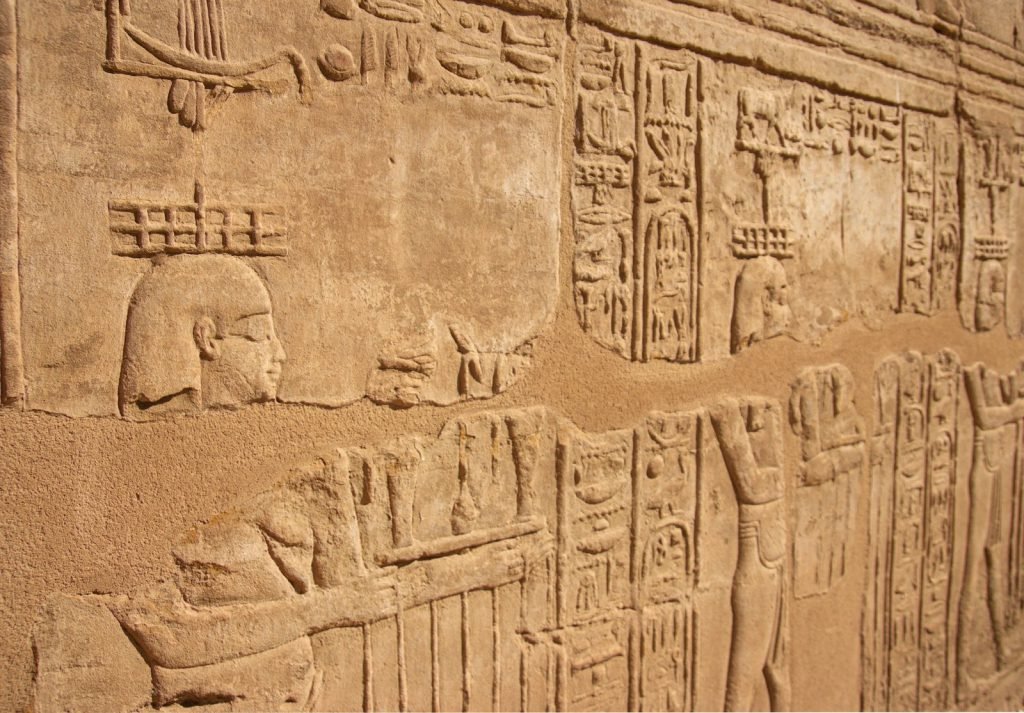
During the great Opet festival, the statue of Amun was carried in a sacred boat from Karnak to Luxor Temple, while crowds celebrated along the way. You can still see this procession carved on the temple walls.
Amwaj tip: visit early in the morning, before the heat and the big groups, when the light is soft on the columns. Come back at night for the Karnak sound and light show, when the temple tells its story in the dark.
Bringing Karnak Temple history to life on your visit
The complex is so large that it is easy to walk past the most interesting details. A good guide helps you read the walls: which king built which pylon, where the names of earlier rulers were changed or erased, and how to recognise Amun, his wife Mut and their son Khonsu in the reliefs.
Give yourself a full morning rather than a quick stop. Near the sacred lake stands a large stone scarab, and local tradition says that walking around it brings good luck. Many visitors smile at the idea and do it anyway.
Karnak is part of the UNESCO World Heritage Site of Ancient Thebes and its Necropolis, together with Luxor Temple and the monuments of the West Bank, so it is worth seeing as part of a wider visit to Luxor.