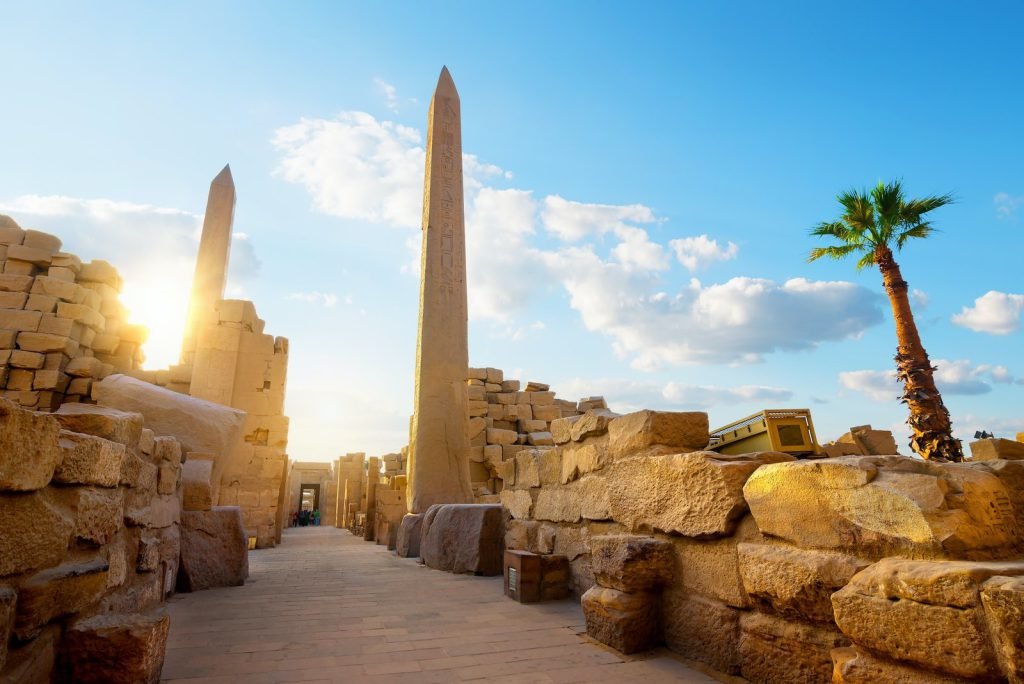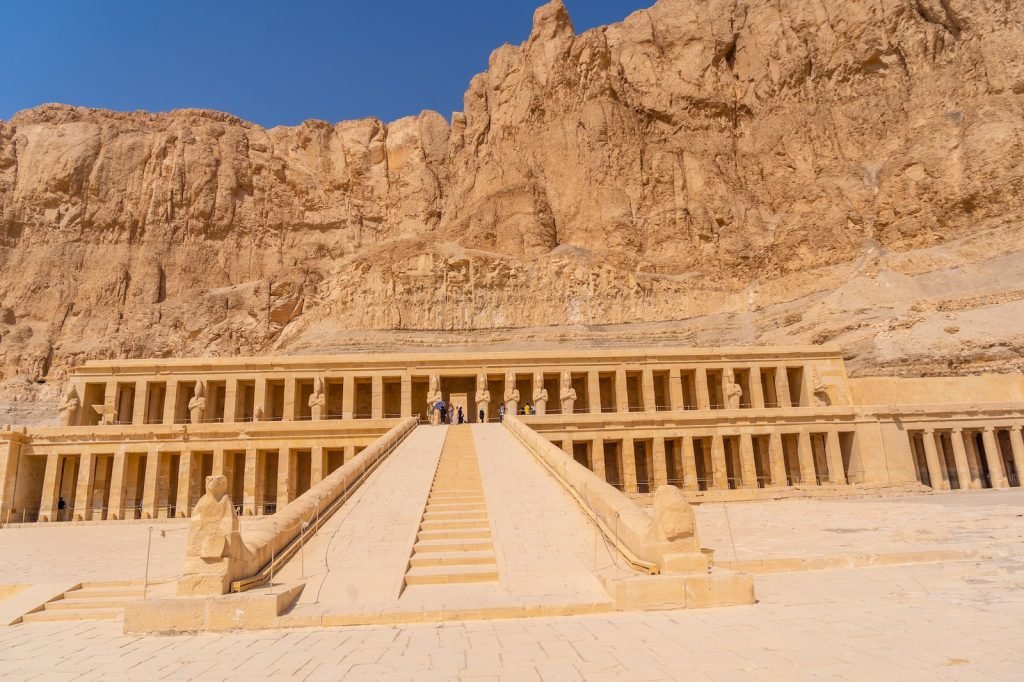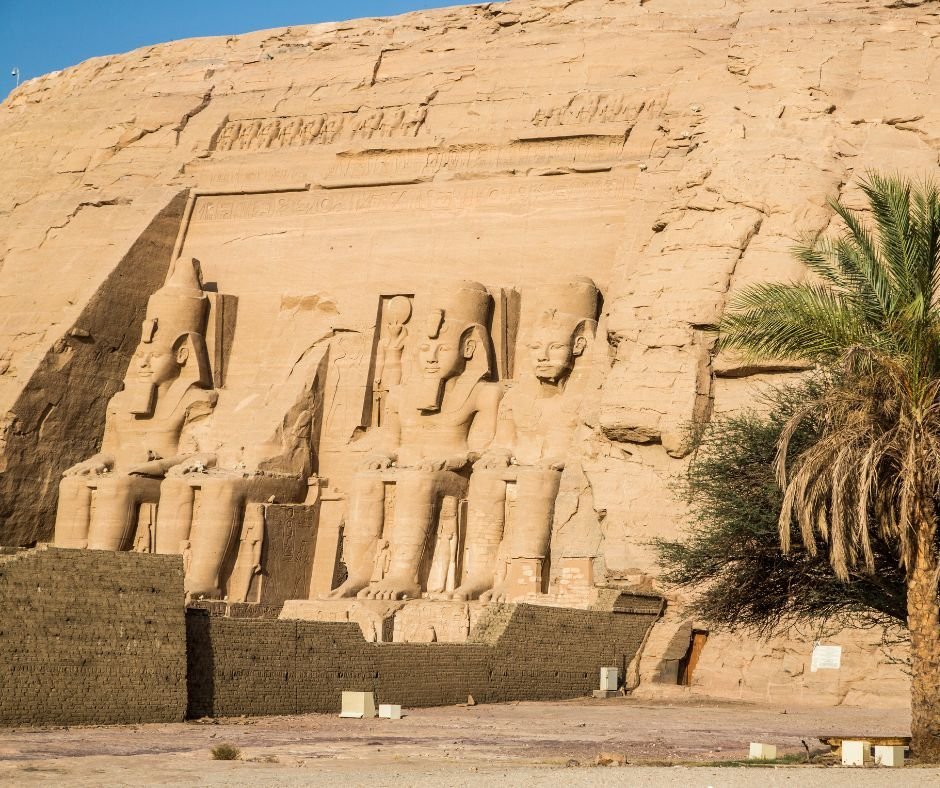
On the west bank of the Nile at Luxor, behind the green fields and the cliffs, lies a dry, silent valley. From the outside it looks empty. But inside its hills are the tombs of the greatest kings of the New Kingdom, the golden age of ancient Egypt, from around 1500 to 1100 BC. Here is Valley of the Kings history in brief.
Valley of the Kings history: why here?
The earlier pharaohs built pyramids, which announced their tombs to the world and to tomb robbers. The kings of the New Kingdom chose a different path: hidden tombs cut deep into the rock. Above the valley rises a natural peak, el-Qurn, shaped like a pyramid, as if nature itself had marked the place.
More than 60 tombs have been found in the valley. Each one is a long corridor leading down into the mountain, through halls and chambers, to the burial room where the king's sarcophagus lay.
A map of the afterlife
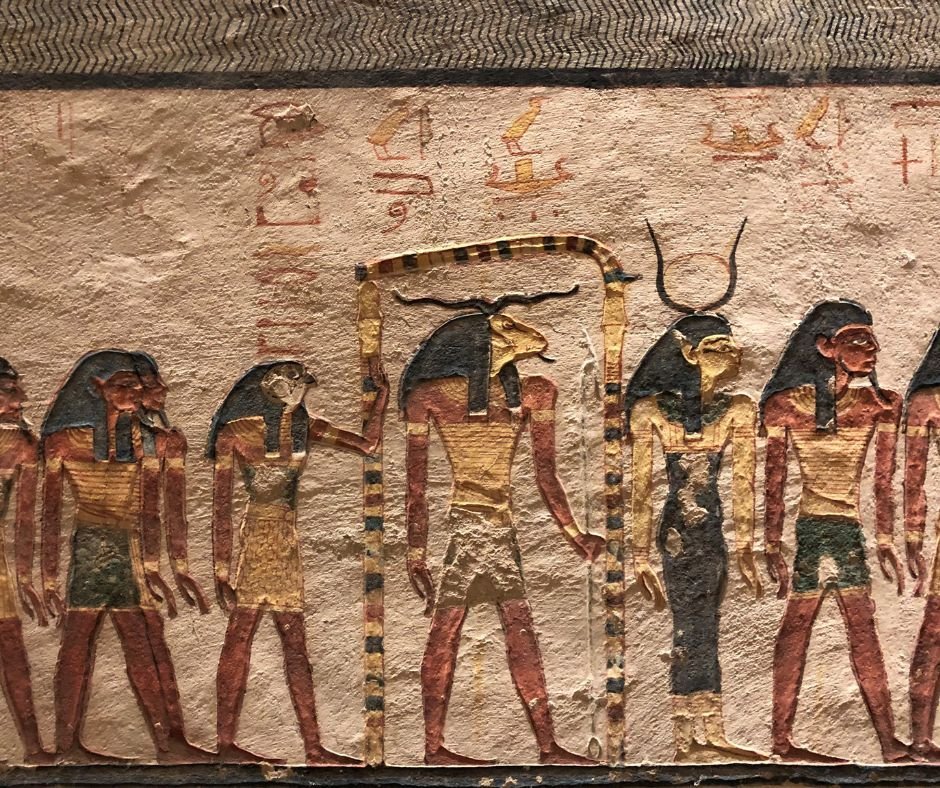
The tombs were not decorated for the living. Their painted walls show the king's journey through the underworld, following the sun god through the twelve hours of the night until he is reborn at dawn. These texts, like the Book of Gates and the Amduat, are among the oldest religious writings in the world. Thanks to the dry climate, many of the colours still look fresh after more than 3,000 years.
Tutankhamun and the find of the century
Almost every royal tomb was robbed in ancient times. The one great exception is the small tomb of Tutankhamun, discovered by Howard Carter in November 1922. Its thousands of treasures, including the famous golden mask, amazed the world and made the young king the most famous pharaoh of all. His mummy still rests in the tomb today.
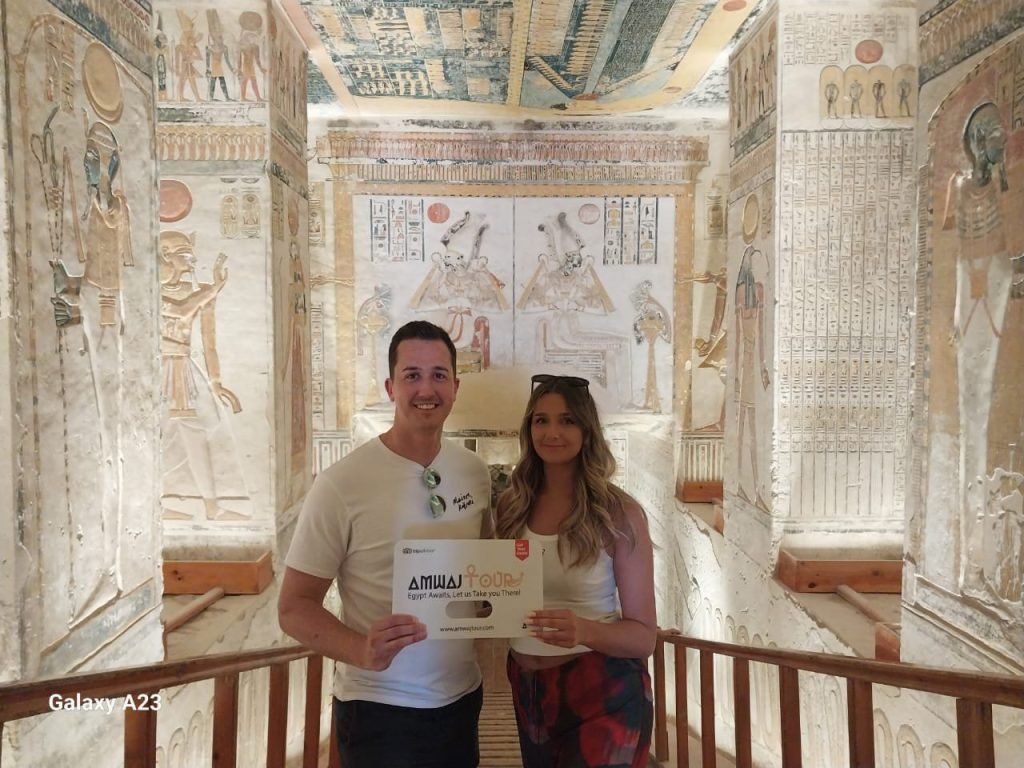
Amwaj tip: the standard ticket includes three tombs, chosen from those open that day. The tombs of Tutankhamun, Seti I and Ramses V and VI need a separate ticket, and they are worth it. Bring water, a hat and comfortable shoes; the valley is hot and there is little shade.
Seeing Valley of the Kings history for yourself
The tombs that are open change from time to time. This rotation protects the paintings, because the humidity and breath of many visitors can harm the ancient colours. For the same reason, please do not touch the walls, and follow the rules on photography at each entrance.
A guide makes a real difference here. The scenes on the walls are full of gods, symbols and texts, and knowing who is who turns a beautiful corridor into a story you can follow, hour by hour through the night of the underworld.
The valley pairs well with two nearby sites. Deir el-Medina was the village of the workmen who cut and painted the royal tombs, and their own small tombs are beautifully decorated. The Valley of the Queens holds the tombs of royal wives and princes.
The whole area belongs to the UNESCO World Heritage Site of Ancient Thebes and its Necropolis, which also includes Karnak, Luxor Temple and the temples of the West Bank.