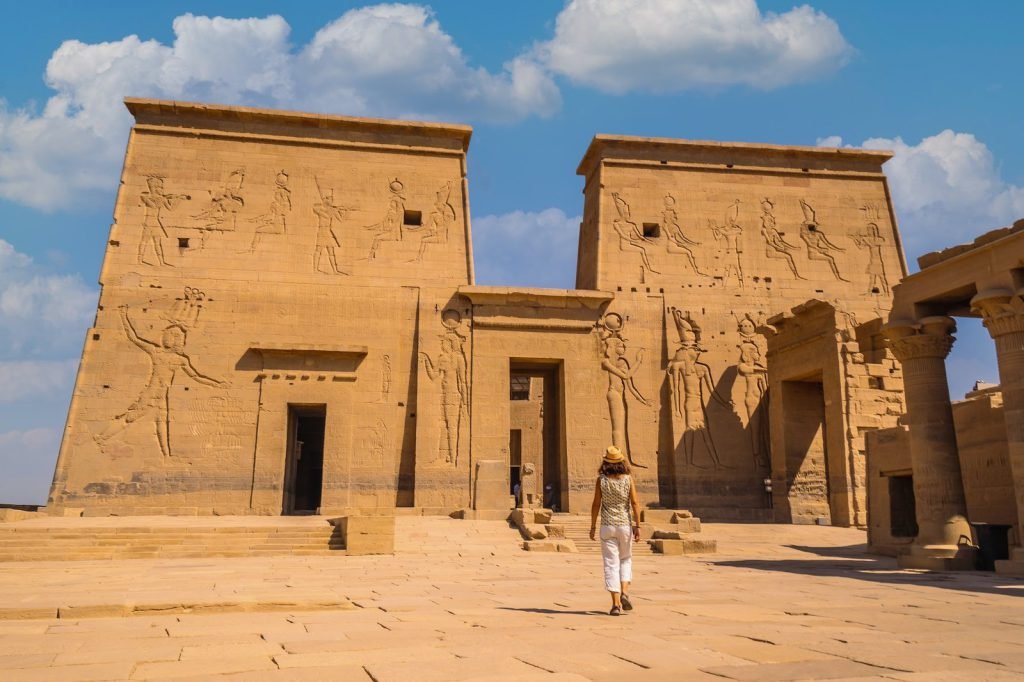
In the calm water above the old Aswan Dam, a small island rises with a golden temple on its shore. This is Philae, the sanctuary of Isis, the goddess of magic, motherhood and healing. You arrive the way pilgrims did thousands of years ago: by boat. Here is Philae Temple history in brief.
Philae Temple history: the goddess of devotion
Isis was one of the most loved deities of ancient Egypt. According to myth, she brought her husband Osiris back to life and protected their son Horus. Her cult spread across the Mediterranean, as far as Rome. Most of the temple we see today was built by the Ptolemaic kings and the Roman emperors, who honoured Egyptian gods to win the loyalty of the people.
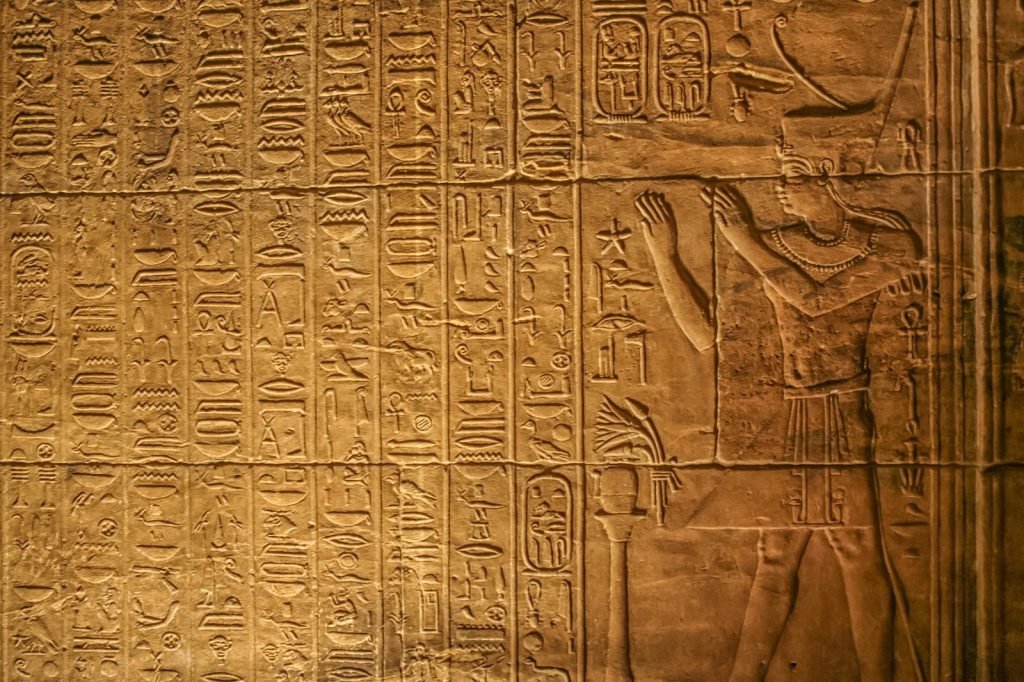
The last hieroglyphs
Philae kept the old religion alive longer than almost anywhere else in Egypt. The last known dated hieroglyphic inscription in the world was carved here in AD 394. Worship of Isis continued until the 6th century, when the Byzantine emperor Justinian closed the temple. Some halls were later used as a church, and you can still see crosses carved into the walls.
A temple moved stone by stone
After the first Aswan Dam was built in 1902, Philae spent much of each year under water. The High Dam would have drowned it completely. Between 1974 and 1980, in a rescue led by UNESCO, the temple was taken apart and rebuilt on the higher island of Agilkia, which was landscaped to look like the original island.
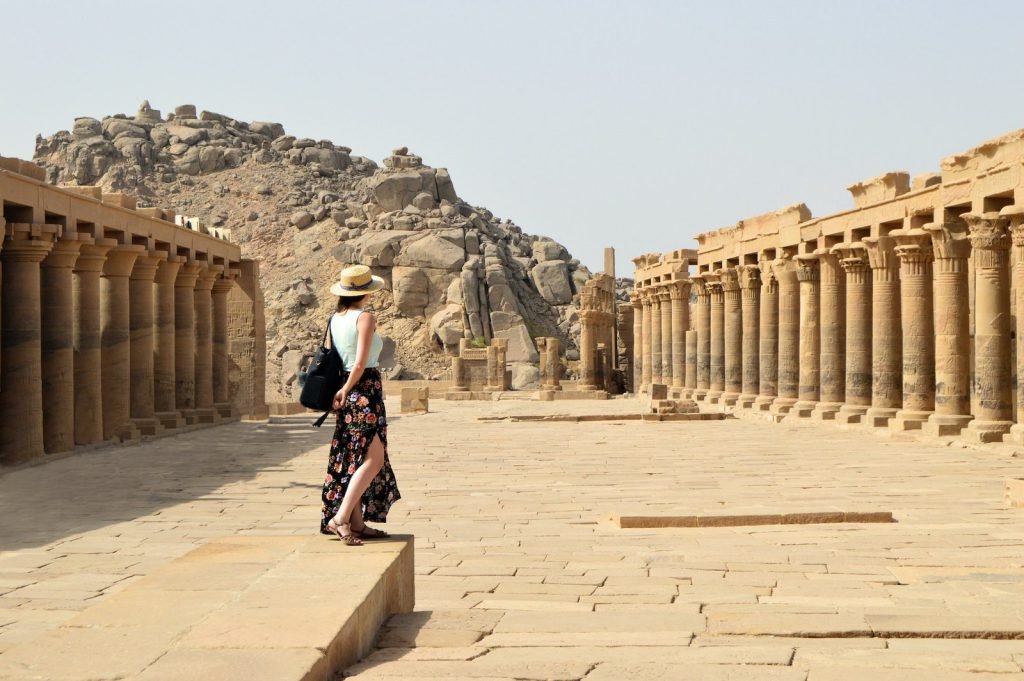
Amwaj tip: do not miss Trajan's Kiosk, an elegant pavilion by the water that appears in many paintings of Philae. Visit in the morning or late afternoon, when the light on the sandstone is warm and golden.
Experiencing Philae Temple history on your visit
Boats to the island leave from a small landing near Aswan, and the short ride across the water is part of the charm. As you come closer, the pylons and colonnades rise straight from the shore, much as they did for the pilgrims who came to the Temple of Isis long ago.
Once on the island, take your time. Look for the birth house, a small temple that celebrates the birth of Horus, and Hadrian's Gate, with its carvings of the Nile's source. Inside the main temple, the reliefs show the king making offerings to Isis and the gods of her family.
Philae is also known for its evening sound and light show, when the temple is lit against the dark water. Many travelers combine the island with other sites around Aswan, such as the High Dam and the Unfinished Obelisk, in one relaxed half day with a guide.
The temple is part of the UNESCO World Heritage Site of the Nubian Monuments from Abu Simbel to Philae, together with Abu Simbel. Bring a hat and sunscreen, as the open courts have little shade.