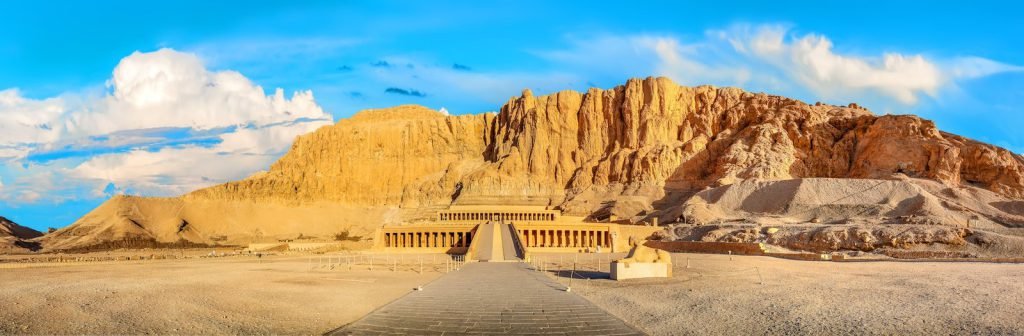
On the west bank of Luxor, at the foot of steep golden cliffs, three wide terraces rise one above the other. They look surprisingly modern, clean and elegant. This is Djeser-Djeseru, "the holiest of holy places", the memorial temple of Hatshepsut. Here is the Temple of Hatshepsut history in brief.
Temple of Hatshepsut history: a queen who became king
Hatshepsut ruled Egypt for around twenty years in the 15th century BC. She began as regent for her young stepson, Thutmose III, but soon took the full titles of pharaoh. In her statues and reliefs she is often shown with the traditional royal headdress and even the false beard of a king. Her reign was peaceful and prosperous, filled with trade expeditions and great building projects.
A design ahead of its time
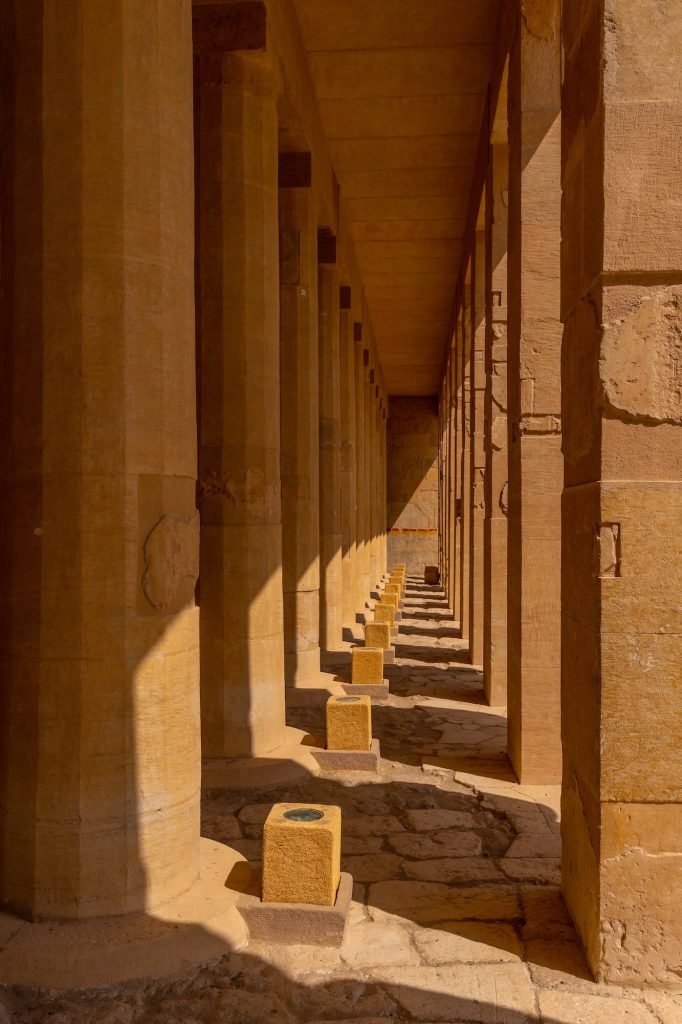
The temple was designed, according to tradition, by her trusted official Senenmut. Instead of hiding behind high walls, it opens to the valley with long colonnades and ramps that lead from terrace to terrace. It sits perfectly against the cliffs, as if it grew out of the mountain. On the other side of those cliffs lies the Valley of the Kings.
The journey to Punt
One of the most charming scenes in the temple shows Hatshepsut's famous expedition to the land of Punt, a distant country somewhere on the Red Sea coast. The reliefs show ships loaded with incense trees, ebony, gold and exotic animals, and even the houses on stilts where the people of Punt lived.
Erased, then remembered
After her death, many of Hatshepsut's images and names were removed from her monuments, probably late in the reign of Thutmose III. For centuries she was almost forgotten. Today, archaeologists have pieced her story back together, and she is remembered as one of the most successful rulers in Egyptian history.
Amwaj tip: come early: the temple faces east and gets very hot by midday. It combines perfectly with the Valley of the Kings and the Colossi of Memnon in one morning on the west bank.
Temple of Hatshepsut history: what to look for on your visit
The temple at Deir el-Bahari is easy to admire from a distance, but its best stories are in the details. On the middle terrace, look for the reliefs of the expedition to Punt and, on the other side of the ramp, the scenes of the queen's divine birth, which presented her as the daughter of the god Amun.
Nearby are two small chapels. The chapel of Hathor has columns topped with the face of the goddess, and the chapel of Anubis still keeps some of its bright original colours. On the upper terrace, statues of Hatshepsut in the form of Osiris line the front of the colonnade.
The ramps are wide but the sun is strong, so wear comfortable shoes and bring water. The temple is part of the UNESCO World Heritage Site of Ancient Thebes and its Necropolis, together with the Valley of the Kings and the other monuments of the West Bank.