If koshari is the food of the street, molokhia is the food of home. Ask an Egyptian about their grandmother's cooking, and molokhia will almost always come up. It is a deep green soup made from the leaves of the jute mallow plant, and it has been loved along the Nile for centuries.
How molokhia is made
The leaves are stripped from their stems and chopped very finely, traditionally with a makhrata, a curved blade with two handles that rocks back and forth over the board. The chopped leaves are then cooked briefly in a rich chicken, rabbit or meat broth. They should not boil for long, or they lose their bright colour.
The final step is the most important. Garlic and ground coriander are fried in ghee until golden and fragrant. This is the ta'leya, and it is poured into the pot with a loud sizzle. In many homes, the cook takes a sharp breath at that very moment. Families call it the shahqa, the "gasp", and say it is the secret to a perfect molokhia.
You can hear good molokhia before you taste it: the sizzle of the garlic hitting the pot.
How to eat it
Molokhia is served with white rice or baladi bread, next to the meat that made the broth. Some people pour it over the rice; others dip their bread into it. Its texture is silky and slightly thick, which surprises many visitors at first, but the flavour of garlic, coriander and broth wins most people over by the second spoonful.
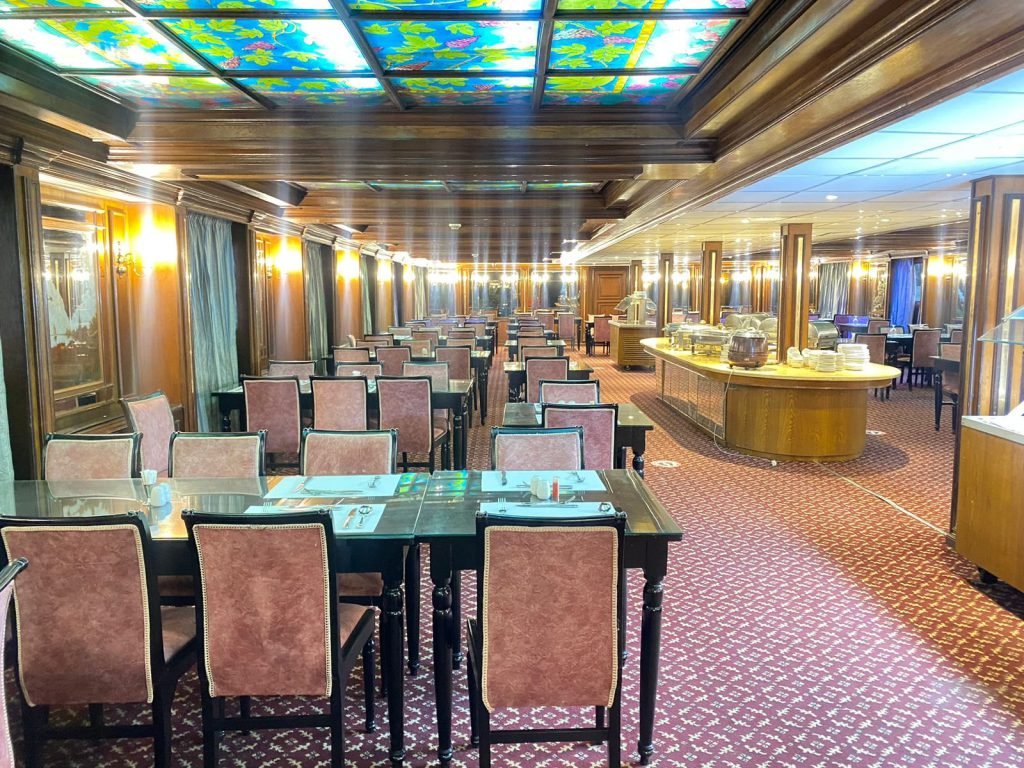
Amwaj tip: look for molokhia on the menu of family-style Egyptian restaurants, and on the Egyptian nights of Nile cruises. It is often made with chicken or rabbit broth, so ask if you prefer a vegetarian version.
Where to try molokhia in Egypt
Because it is home cooking first, the most satisfying bowls are often found in simple family-style restaurants that serve Egyptian dishes every day. Look for it on the menu next to roast chicken, rabbit or meat, and expect it to arrive in its own bowl, with rice or bread on the side.
The dish changes a little from place to place. In Alexandria and other coastal towns, it is sometimes cooked with a broth of fish or shrimp. Across the wider region, cooks also use the leaves of jute mallow, but in parts of the Levant the leaves are often cooked whole, while Egyptians chop them very fine for the silky texture they love.
In winter, when fresh leaves are harder to find, many families cook with dried or frozen leaves, which you will see in markets and supermarkets. A small bag of dried leaves is an easy souvenir for anyone who wants to try making it at home.
If you are invited to an Egyptian home, this Egyptian comfort food may well be on the table. Hosts love to see guests eat well, so a second helping and a few kind words about the cooking are the best thanks. You can find more about regional food on Egypt's official tourism site.
Top photo: Showshow777, CC BY-SA 4.0, via Wikimedia Commons.